
Should You Take the Via Lingua TEFL Course in Istanbul? My Candid Review After Four Weeks
Table of Contents
- 1. Finding the Program
- 2. The Kent English – Via Lingua Partnership
- 3. Facilities
- 4. Location and Neighborhood
- 5. Living in Kadıköy and Daily Logistics
- 6. Orientation
- 7. Course Structure and Grading
- 8. Teaching Practice (36%)
- 9. Individual Project (24%)
- 10. Portfolio (8%)
- 11. Group Project (4%)
- 12. Attendance (4%)
- 13. Grammar and Final Exam (24%)
- 14. Practical Advice and Reflections
- 15. Conclusion
Finding the Program
I first discovered the Istanbul TEFL program through the International TEFL Academy (ITA):
https://www.internationalteflacademy.com/tefl-tesol-certification-courses/europe/turkey/istanbul
ITA is a well-established organization that partners with accredited training centers around the world.
Their listing immediately caught my attention:
"Accredited TEFL course led by university-level instructors with hands-on live teaching practice and lifetime job-search support."
As of 2025, ITA lists the tuition at about US $1,450, with a $500 deposit to hold your seat. The course runs full-time for four weeks, with start dates throughout the year (Nov 3–28 2025, Feb 2–27 2026, Apr 6–30 2026, Jun 1–26 2026).
When you register through ITA, they place you with their Istanbul partner school — Via Lingua Istanbul, hosted at Kent English in Kadıköy. ITA handles enrollment and international support; Kent English and Via Lingua provide the on-site instruction and certification.
The Kent English – Via Lingua Partnership
Kent English (https://www.kentenglish.com/) was founded in 1988 and is one of Istanbul’s oldest private language schools, known for professional English programs, exam preparation, and corporate training. They also describe their CTEFL teacher training partnership here: https://www.kentenglish.com/D/180/ctefl-.html
Via Lingua (https://www.vialingua.com/course-tefl/istanbul-tefl-course.html) is an international TEFL network operating in more than a dozen countries. It supplies the standardized curriculum, grading system, and globally recognized certificate.
The Istanbul program is conducted inside Kent English’s classrooms, delivered by Kent English instructors under the Via Lingua framework.
You study at Kent English but graduate with a Via Lingua certificate.
The setup blends local expertise with international accreditation — a practical partnership that works.
Facilities
The Kent English / Via Lingua center occupies a small but modern building in central Kadıköy. It’s functional, clean, and decidedly academic in feel.
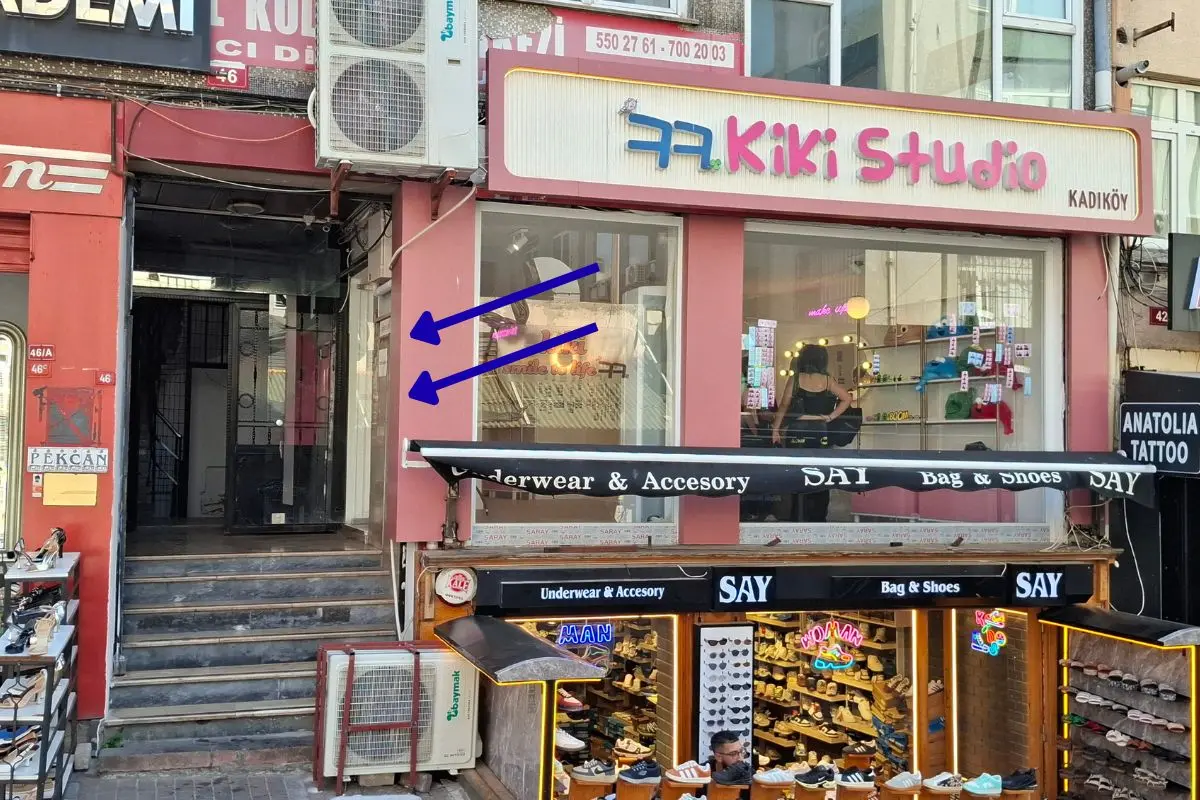
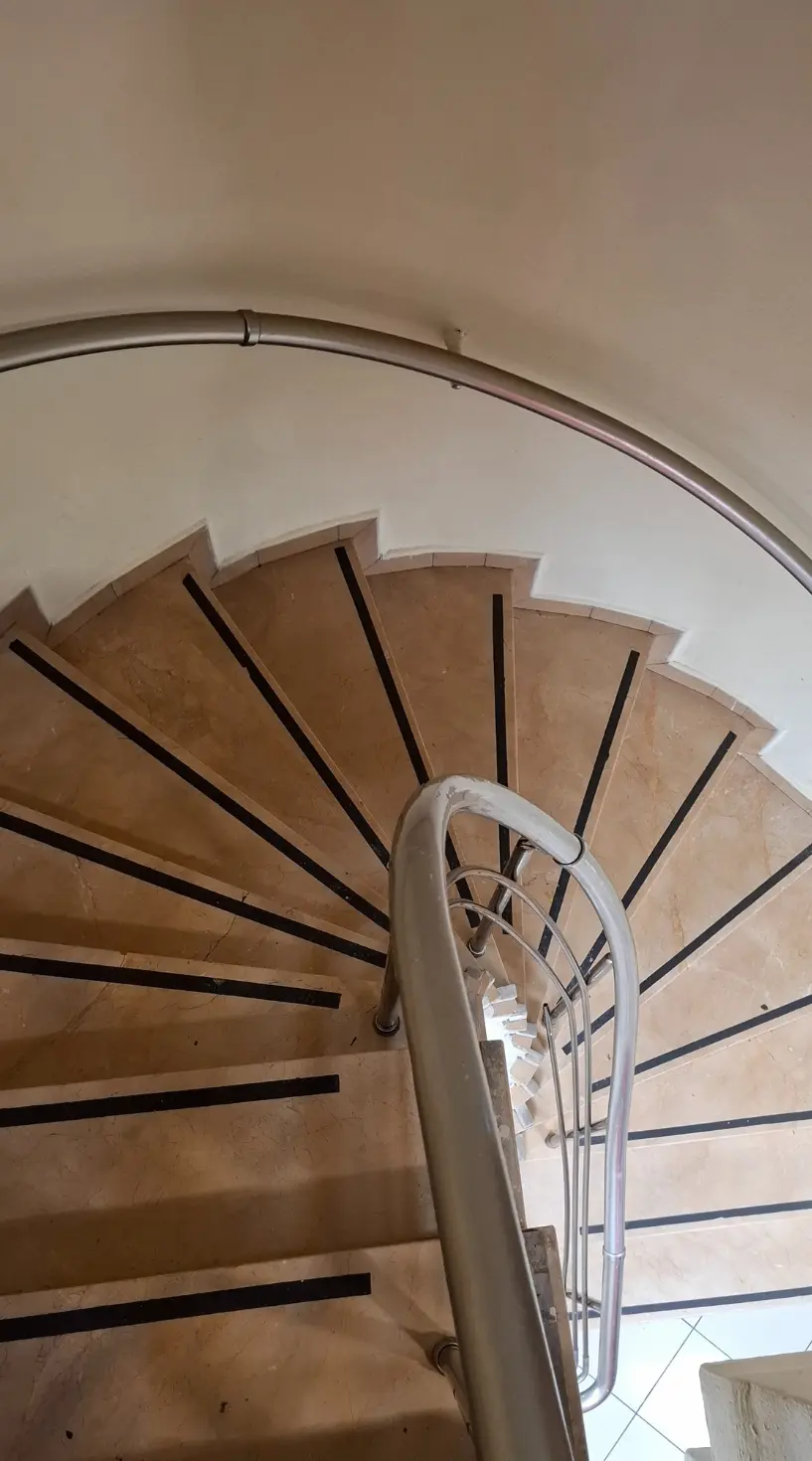
- Access & stairs: The school sits on the third floor, up two flights of narrow, winding stairs, and there is no elevator. Keep this in mind if you have mobility issues.
- Air conditioning: Each classroom is air-conditioned — essential in the warmer months.
- Room layout: Classrooms are on the small side. Seating is arranged in a U-shape, which means there’s very little space between the back of a student’s chair and the wall. It can feel tight during pair or group activities.
- Break room: There’s a modest but comfortable break room with a fridge, kettle, microwave, and coffee pot. Snacks and drinks are inexpensive but not free.
- Schedule: Classes run roughly 10 a.m.–5:10 p.m., with lighter Fridays, meaning that if you would like to take a trip out of town, you can catch a Friday evening flight.


Location and Neighborhood
The school is located in Kadıköy, on the Asian side of Istanbul — a district that feels like a cozy college town wrapped inside a major city. Cobblestone streets wind past bookstores, tea shops, cafés, and cats — lots of cats. It has a small-town charm that contrasts beautifully with the size of the city itself. It feels like a small town nestled within the largest city in Europe.
Kadıköy is perfectly placed for exploring. The ferry terminal is just a short walk away, and in about twenty minutes across the Bosphorus you can be on the European side, dropped off just blocks from Istanbul’s Old Town, featuring the Hagia Sophia, the Blue Mosque, the Obelisk of Theodosius, and the Topkapi Palace. It’s one of the city’s best commutes — sea breeze, skyline views, and seagulls overhead.
The Nautilus Mall is close by, providing groceries, quick meals, and coffee. It’s convenient, lively, and makes day-to-day errands simple.


Living in Kadıköy and Daily Logistics
One of the great advantages of training in Kadıköy is that you’re living in a walkable, vibrant neighborhood filled with small markets, bakeries, cafés, and restaurants. You’ll even find a jewelry district nearby — and cats, everywhere. Lots of cats.
A convenient hub for daily errands is the Tepe Nautilus Mall, which sits just a short walk from the school. It’s a large, modern shopping center that feels a bit like a Super Walmart, with a full supermarket and department store under one roof. The grocery store inside is CarrefourSA, a French supermarket chain that offers everything from fresh produce and bakery items to household goods. It even has a small restaurant area.

The mall is about five levels high (Kat 2, Kat 1, Ground/Zemin, Kat -1, Kat -2) and features a top-floor food court with typical Turkish fare and international chains like Carl’s Jr. (Hardee’s) and Burger King. On the first floor, there’s a sit-down restaurant called Big Chef, which serves a wide range of international dishes at reasonable prices — comparable to an Applebee’s or Chili’s in the U.S.
According to Via Lingua’s website, accommodation in a shared apartment runs about $450 USD for the four-week course. Personally, I paid $961 USD for a private Airbnb about a 12-minute walk from the school. However, my host mentioned a new Istanbul ordinance requiring a minimum stay of 100 nights for Airbnb bookings going forward — something to keep in mind and verify before booking.

Getting around Kadıköy is easy. The district is served by ferries, buses, and the metro, and you can reach the European side of Istanbul in about 20 minutes by ferry, getting dropped off just blocks from the Old Town — near the Hagia Sophia, Blue Mosque, Obelisk of Theodosius, and Topkapi Palace. It’s one of the most scenic commutes imaginable: sea breeze, skyline views, and seagulls overhead.
Uber works fairly well in Istanbul, though wait times can vary. Some drivers try to charge riders directly for bridge or tunnel tolls when crossing to the European side, but according to Uber’s official policy, tolls are automatically included in the fare and should not be paid separately.
Overall, day-to-day life in Kadıköy is pleasant, practical, and surprisingly affordable — an ideal place to study, live, and explore the city between classes.

Orientation
On the first day, you’re given a comprehensive orientation. Along with the verbal information, you are given a binder with information about the course that includes:
- General information about the school and course structure
- A sample portfolio
- A sample individual project report
- A sample lesson plan
- A practice final exam
- More information about the group project, individual project, and portfolio
You’ll also receive a digital (Word) template for your portfolio and individual project by email from the school. It’s a lot of information, but reading through it in the first couple of days will make the rest of the month smoother.
Course Structure and Grading
The Via Lingua course is four weeks long, fast-paced, and academically rigorous.
All instructors involved in my course taught at the university level, and two held doctorates. They may use other instructors at times, but in my case, the teaching quality was exceptional — truly above expectations. Every lesson was delivered professionally, with university-level clarity, and all trainers were approachable and deeply experienced in their subjects.
Course Structure and Grading
|
Component |
Weight |
|
Teaching Practice |
36 % |
|
Individual Project |
24 % |
|
Final Exam |
24 % |
|
Portfolio |
8 % |
|
Group Project |
4 % |
|
Attendance |
4 % |
A score of 80 % is required to pass; 90 % qualifies as honors. This is not a “certificate for showing up” course — you must earn it.

Teaching Practice (36%)
You’ll teach six lessons in total — the first two are ungraded, to get you used to the process and help work out your nerves. The remaining four are graded by the director.
There are typically four to six students in every practice class, so the atmosphere is friendly and far less intimidating than standing before a full class of fifteen people.
You’re given both the student and teacher editions of the textbook; lessons are drawn directly from the assigned pages. Follow the teacher’s manual closely — it ensures you meet every objective.
You’ll also receive a teaching schedule indicating the time, the exact pages you’ll teach (usually one or two), and when you’ll observe a peer’s session. In our class, we did student teaching Tuesday through Thursday mornings during weeks 2 and 3, though I imagine that schedule can vary with class size.
After each teaching session, you meet with the director and a peer evaluator for immediate feedback. The process sounds intimidating but is actually supportive and encouraging — one of the most valuable parts of the course.
The feedback from the director pulls no punches. I didn’t feel mistreated or disrespected, but it was definitely not the “you paid the fee, we’ll smile and pretend you did great” attitude I half expected. No — this was serious. The comments aren’t brutal, but they’re honest and direct, which I appreciated because it made it easier to improve my next lesson.
Individual Project (24%)
For this project, it’s the student teacher’s responsibility to locate a student to work with. If that’s difficult, the school will find one for you.
You meet with your chosen learner twice — once for an initial meeting and again for a taught lesson based on your findings. Afterward, you submit a report including your evaluation of the learner’s English level, your lesson plan, and your reflection on the effectiveness of the lesson.
I was able to complete mine remotely via WhatsApp video calls, and it worked just fine. The student doesn’t need to return to the school or submit anything — only your report is evaluated by the instructors.
Select your student and make your arrangement for the first meeting by early in week 2. By getting that first meeting out of the way, you have sort of locked them in and committed them so they know you are depending on them. That gives you time to create the lesson plan, teach the lesson, and complete the report by the middle of week 3. Remember, you will be doing practice lessons during that time, so starting early gives you more time to do the work. It would be a good idea to explain clearly to your student during the initial meeting that you are on an accelerated time scale and that you have to write a detailed report after the lesson. The idea is that they realize you are depending on them to show up instead of flaking on you and rescheduling. One of the trainees in my course had issues getting her student nailed down for the lesson, which caused last-minute problems while she was trying to study for the exam.

Portfolio (8%)
The portfolio is annoying and it seems pointless. It is like a diary of what you learned, skills you picked up on a daily basis, what you've practiced, how you've improved. It isn't all about feelings; it wants specifics. As annoying as it is, it is also 8% of the grade, so it should not be overlooked. The key here is to get the electronic version of the portfolio template and spend about two minutes (literally) every day filling it out after class. Towards the end of the class, you can edit it and make it more professional. If you update it daily, it is a breeze and an easy 8% toward passing. If you wait until the end, it is a nightmare.
Group Project (4%)
We were told the group project could be virtually anything: cooking a meal from your home country, creating a video, designing a picture book, or anything that showcases the cultural background of the trainees.
Our class decided to keep it simple. Each of us gave a short slide presentation about where we’re from and what life is like there. It was low-stress and worked well for a small group.

Attendance (4%)
Straightforward — attend every class and participate. With such a compressed schedule, missing a day means missing hours of instruction.
Grammar and Final Exam (24%)
The final exam focuses heavily on grammar, with smaller sections on phonology and lesson planning. It covers about seventeen hours of classroom instruction condensed into one test.
| Section | Focus | Weight |
|---|---|---|
| Parts of Speech & Clauses | Identification | 10% |
| Error Correction | Rewrite and explain the rule | 30% |
| Verb Tenses | Identify tense, describe function, give a teaching idea, model sentence, and timeline | 25% |
| CCQs & Phonology | Concept Check Questions and phonemic transcription | 15% |
| Lesson Plan | Create a complete plan for a target grammar point assigned on the test — usually comparing two similar tenses | 20% |
You’re expected to demonstrate mastery of TEFL concepts: PPP (Presentation – Practice – Production), ICQs, CCQs, modeling, and timeline diagramming.
Practical Advice and Reflections
Be ready for a university-level workload. The instructors are serious academics, and the course moves fast. There’s little assigned homework, but self-study is everything. The philosophy seems to be:
"We present the information — you decide how to keep it in your brain."
They won’t remind you to study; it’s your responsibility. Start studying from day one and don’t stop. If you think you’re caught up, study ahead. Memorize the phonetic alphabet early, or review future grammar units before they’re taught so you can ask sharper questions.
The grammar instructor — a linguist with decades of university experience — was a master teacher. Not only did he have a well-prepared answer for every question we asked, I am convinced he knew the questions we would ask before we did. He is that good. Still, no amount of teaching prowess can make absorbing seventeen hours of dense grammatical instruction in a four-week period easy. Independent study is key, and it is advisable to read the sections he is going to cover in class the night before. When it comes to grammar in this course, every advantage helps.
In the orientation binder you’ll find a sample exam formatted exactly like the real one. Use it as a study guide. It shows what they emphasize and helps direct your effort. I mean, it was exactly the same format. They had the same type of questions for the same points. The actual final uses the same format but changes the specific questions. Being able to explain and diagram all tenses on a timeline is essential. And more than just explaining and diagramming, you need to be so up to speed on the tenses that you know how two tenses are similar and what sets them apart. That may be the topic for your lesson plan question on the exam.
The last question on our exam was the 20 percent lesson plan preparation. They give you a grammar-related topic and a blank lesson plan template to fill out. This can be a bit daunting, especially given the three-hour time constraint of the exam (all three of us finished by the two-hour mark, so it’s plenty of time). To ease the burden of searching your memory and cobbling together a lesson plan by the seat of your pants, I suggest you do what I did.
I designed a plug-and-play lesson plan template that contained all the essential TEFL buzzwords and methodological steps in a clear, general order. Then, once the topic was given, I just used that skeleton and filled in the details. It worked wonderfully. Remember though, when I say "template", I mean mentally. You cannot use any notes on the exam, so you have to commit the template to memory.
Remember, they are testing you to see if you learned the TEFL philosophy and methodology. Use the terminology.
It’s important to note that, because this is a test environment, you don’t need to design real materials or specify exact exercises on your lesson plan. You can generalize by writing things like "watch a video that shows …" or "read a short text that says …". The goal is to demonstrate your understanding of lesson structure and pedagogy, not resource creation.
Use the correct terminology throughout — PPP (Presentation, Practice, and Production), ICQs, CCQs, FFMP, modeling, controlled practice, freer practice, feedback, and correction — I am sure seeing that terminology will improve your grade.
Conclusion
If you are serious about becoming a TEFL teacher and want professional-level training, the Via Lingua Istanbul program at Kent English delivers exactly that. It’s intense, fast-moving, and academically demanding, but it gives you the structure, methodology, and confidence you need to walk into a classroom anywhere in the world. Kadıköy’s relaxed, café-filled neighborhood provides a perfect backdrop to balance the workload. Study hard, stay organized, and start early on everything. If you do, this course will reward you with not just a certificate but real, practical teaching skills.